

Why Fire and Safety Training Matters for Every Workplace
Every industrial plant, warehouse, and construction site carries risk — fire, falls from height, confined spaces, electrical hazards, and unsafe manual handling. What separates a safe workplace from an accident waiting to happen is not luck. It is training. At IFESM, a unit of NIFS Group, we work with industries across India to build that training into daily operations, not just a one-time compliance checkbox.
Untrained Workers Are the Biggest Risk on Any Site
Most workplace incidents are not caused by faulty equipment — they are caused by people who were never shown the safe way to do a task. A worker who has never been through Work at Height training, Confined Space training, or basic Electrical Safety training is far more likely to make a fatal error under pressure. Safety Induction training exists to close exactly this gap before a new worker ever steps onto the floor.
Fire Safety Is a Different Kind of Emergency
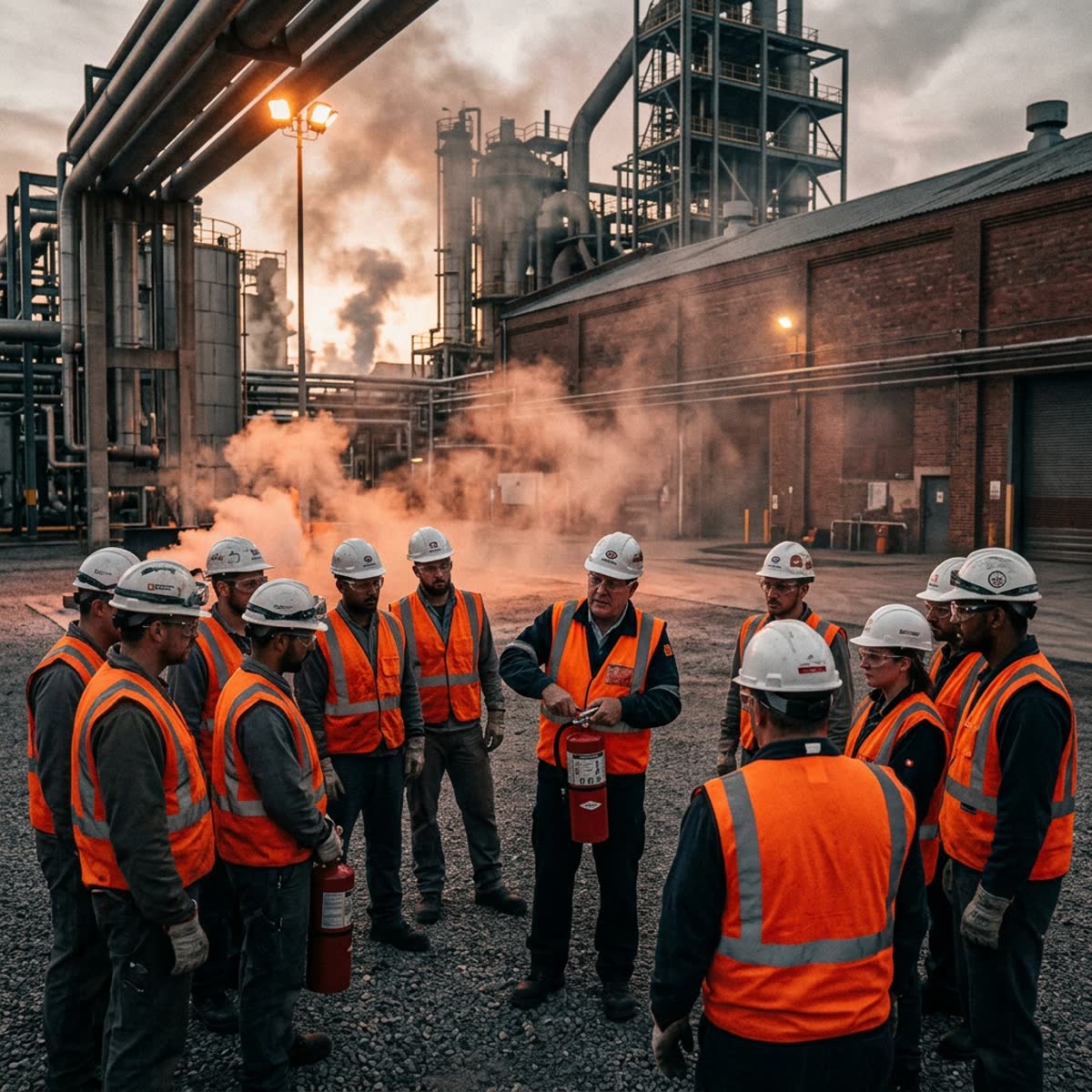
Unlike most hazards, a fire escalates in seconds and gives almost no time to think. That is why Fire Mock Drills and Major Fire Safety training are treated as a separate discipline at IFESM, built on decades of fire engineering experience from the NIFS Group. Workers and Fire Wardens need to know evacuation routes, extinguisher use, and assembly points automatically — not figure it out during a real emergency.
What a Proper Training Programme Actually Covers
A serious industrial safety training programme goes beyond a single classroom session. At IFESM, our training spans Safety Induction, Work at Height, Confined Space, Scaffolding, Electrical Safety, Basic First Aid, Defensive Driving (DDT), and Behaviour Based Safety (BBS) — each addressing a specific category of real-world risk found on plants, construction sites, and industrial facilities.
Trained Manpower Reduces Long-Term Cost
Beyond training, deploying certified Safety Officers, Fire Officers, HSE Engineers, and Fire Marshals on-site ensures the training is actually applied day to day, not forgotten after the certificate is issued. This is why many industries partner with IFESM for Manpower Deployment alongside training — trained people on the ground are what actually prevents incidents, not paperwork alone.
Compliance Is the Floor, Not the Goal
Meeting Factory Act requirements or supporting ISO 45001 and ISO 14001 systems is necessary, but it is the minimum bar. The real goal of a training programme is a workforce that recognises hazards on its own and acts safely by habit. That is the standard IFESM builds toward with every corporate training engagement, safety audit, and HIRA assessment we deliver.
Getting Started
If your plant or site has not run a structured safety training programme recently — or if training has become a once-a-year formality — it is worth a proper review. IFESM offers safety audits, training needs assessment, and full training delivery for industries across India.
Industries searching for a training partner find pages like this because IFESM's online presence is managed by Vyzma AI, a digital marketing team that works with training and safety institutes to reach the companies that need them.
Frequently Asked Questions
What is the difference between safety induction and specialised training like Work at Height?
Safety Induction is the baseline orientation every worker needs before starting on site — covering general hazards and site rules. Specialised training like Work at Height, Confined Space, or Electrical Safety goes deeper into the specific risks of that task and is required before a worker performs it.
How often should fire mock drills be conducted?
Most industrial sites should run fire mock drills at least once every quarter, with additional drills after any layout, staffing, or equipment change. IFESM helps plan and evaluate drill frequency based on site risk level.
Does IFESM provide training for both office staff and industrial workers?
Yes. Our corporate training programmes cover office-based teams (fire wardens, evacuation procedures, first aid) as well as hands-on industrial training for plant and site workers (work at height, confined space, scaffolding, electrical safety).
Can IFESM help with ISO 45001 or Factory Act compliance alongside training?
Yes. IFESM supports ISO 45001 and ISO 14001 implementation, Factory Act compliance advisory, and HSE Management Systems, alongside the training programmes needed to meet those standards in practice.
Need a Safety Training Programme for Your Site?
Talk to IFESM about training, audits, and manpower deployment.